- About us
- Navigator of support measures
- Success stories
-
Useful information
- Implementation of the Competition Development Standard in the constituent entities of the Russian Federation
- Report "The state and development of competition in the constituent entities of the Russian Federation"
- Disclosure of information by subjects of natural monopolies
- Legislation and official documents
- Development territories
- Contact Navigator
- Investor's personal account


-
To the investor
- General information about the Omsk region
- "One window" for the investor
- Surveys
- Commercial services
- The region's strategy
- Investment proposals
- Investment proposals of municipal districts of the Omsk region
- Investment declaration of the Omsk region
- Industrial clusters of the Omsk region
- Support measures
- Investment Activity Council
- A plan for the creation of investment facilities and facilities for the necessary transport, energy, social and other infrastructure
- Code of investment rules of the Omsk region
- Investment attractiveness
- Proactive budgeting
- Action plan to improve the investment climate
- Advantages of the region
- Investment platforms
- Investment projects
- Public-private partnership
- ASI Experts
Transport and logistics industry
Omsk region is the center of the intersection of the most important transport routes.
Omsk region has an advantageous transport and geographical location, being located on direct routes between Asia and European countries. Being at the intersection of important transport corridors connecting Europe with the Far East, Kazakhstan and China, and a major waterway, the Omsk Region has all the prerequisites for creating the largest transport and logistics center in Siberia.
Transport infrastructure of the Omsk region:
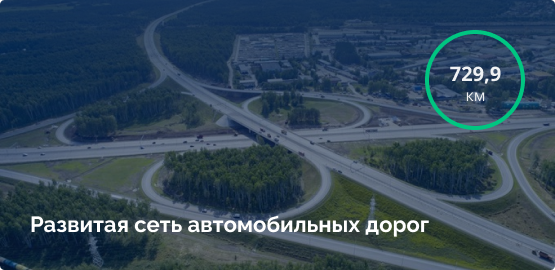
- The total length is 729.9 km;
- major federal highways R-402 Tyumen – Yalutorovsk – Ishim – Omsk, R-254 Chelyabinsk – Kurgan – Omsk – Novosibirsk (part of the European route E30 and the Asian route AH6), A-320 Omsk – Cherlak – border with the Republic of Kazakhstan (part of the European route E127 and the Asian route AH60);
- ensuring cargo traffic in the direction of Europe - Kazakhstan - Central Asia;
- delivery of 1 ton of cargo from Omsk to Moscow – from 5 thousand rubles;
- The volume of goods transported by road by organizations is more than 18 million tons, of which intercity transportation is more than 4 million tons, international transportation is more than 9 thousand tons.
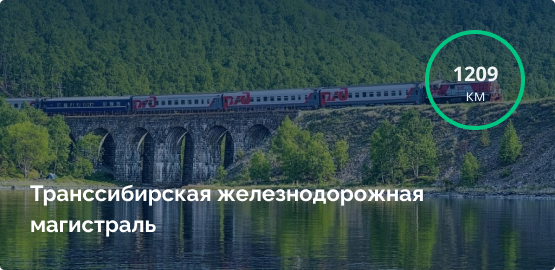
- The total length of the Omsk region is 1209 km.;
- 7 freight yards with storage areas and warehouses, 25 railway stations;
- delivery of 1 ton of cargo from Omsk to Moscow – from 3 thousand rubles;
- It connects the western and eastern regions of the country: the highway passes through the territory of 20 subjects of the Russian Federation and 5 federal districts.;
- international communication: in the east, the highway provides access to the railway network of North Korea, China and Mongolia, in the west - through Russian ports and border crossings – to European countries.
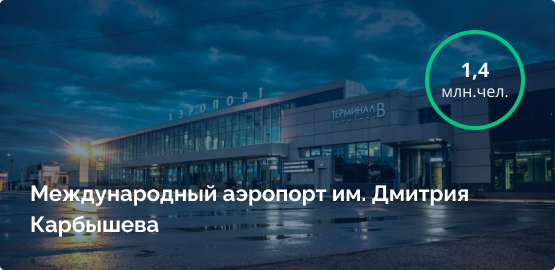
- It is one of the top thirty Russian airports for passenger, cargo and mail transportation.;
- It is included in the list of 52 airfields of federal importance necessary for the exercise of the powers of the Russian Federation.;
- 1 cargo terminal with warehouses and open overpasses;
- The annual passenger traffic is more than 1.4 million people, the volume of cargo transportation is more than 3 thousand tons.;
- Geography of flights: cities of Russia and the CIS, non–CIS countries - Greece, Turkey, Thailand, Vietnam, Tunisia, Bulgaria, Cyprus.
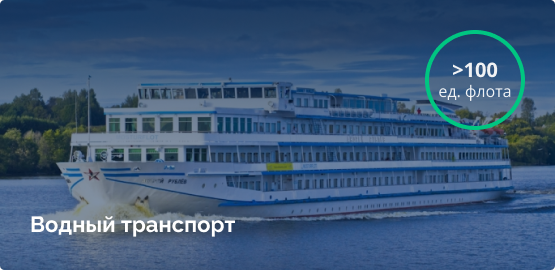
- The inland waterways of the Omsk Region fall into the backbone network of inland waterways of the Russian Federation;
- The Ob-Irtysh basin has links with Kazakhstan and China;
- The Omsk Region has access to the Northern Sea Route and the Asia-Pacific region.;
- Omsk River Port JSC is a major transport hub in the Omsk region;
- the developed property base of the river port includes over 100 fleet units, mechanized cargo berths, storage areas and premises;
- The river port provides: shipping of goods by inland waterway of more than 2.8 million tons per year, including to the Far North of more than 450 thousand tons; cargo transportation between Russia and Kazakhstan with a volume of more than 150 thousand tons / year.
Main directions and development opportunities:
- creation of the Omsk-Fedorovka passenger and logistics multimodal hub, with the possibility of providing integrated transportation: by air, by road, by water and by rail, including the construction of a container terminal for rail transportation;
- switching cargo flows to inland waterway transport – development of navigation with the possibility of providing access via the river route to the Northern Sea Route;
- development of road infrastructure – construction of the Northern Bypass of Omsk, Tobolsk-Tara-Omsk highway;
- construction of railway infrastructure, optimization of cargo transportation routes, development of railway communication along the Central Asian branch;
- expansion and development of the air transport route network.
